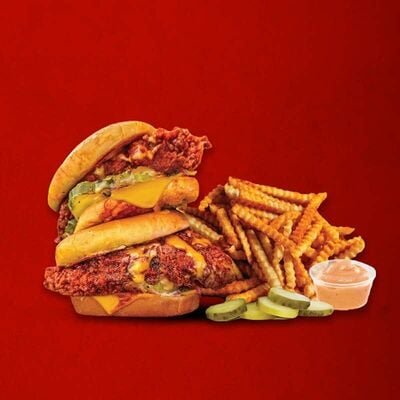
The spice board at Dave’s Hot Chicken is the easy part. Seven levels, clearly labeled, no guesswork. Then someone in line asks the harder question: Is any of this actually safe to eat if you’re avoiding gluten, dairy, or peanuts? That question does not have a menu board answer, and pretending it does is how people end up guessing at the counter with a line building behind them.
This is a hand-breaded, shared fryer kitchen, which means the honest answer to most allergen questions is “it depends,” not a clean yes or no.
Dave’s Hot Chicken uses shared fryers and equipment for almost all fried items. The chicken, breading, buns, and most sauces contain gluten, dairy, egg, or soy. While Dave’s generally fries in soybean oil rather than peanut oil, cross-contact risk is high for severe allergies.
This guide breaks down where the major allergens actually show up on the menu, corrects a couple of claims that circulate online but do not hold up, and gives you a straight process for getting a real answer before you order. Treat it as the essential background you want before you talk with your local store staff.
Quick Glance Risk Table
| Menu Category | Typical Allergens Present | Risk Level |
|---|---|---|
| Chicken tenders & sliders (breaded) |
Wheat, egg, often soy | High |
| Brioche buns | Wheat, egg, dairy | High |
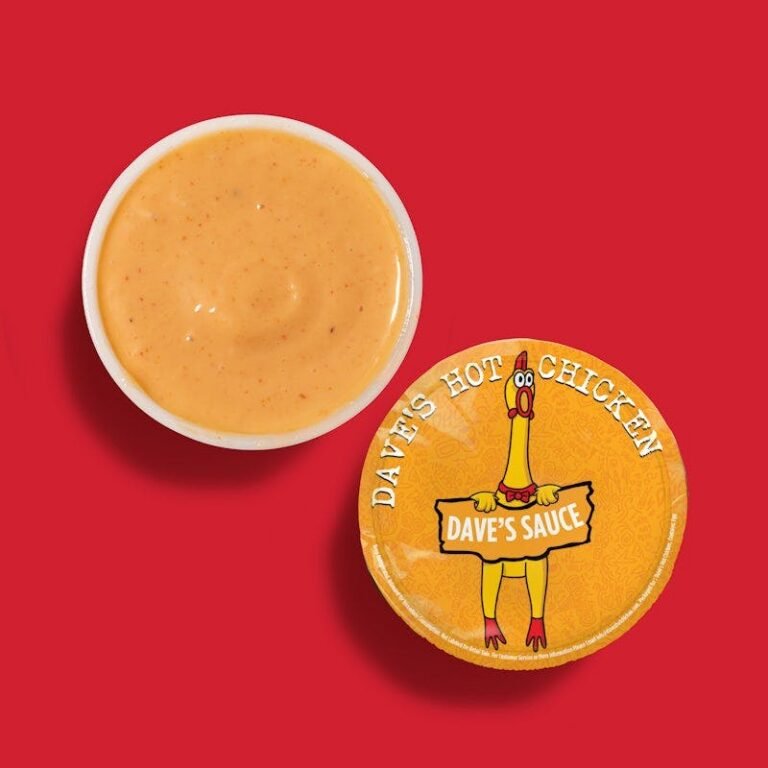
| Dave’s Sauce & most dipping sauces | Egg, soy, dairy (varies by sauce) | Moderate to High |
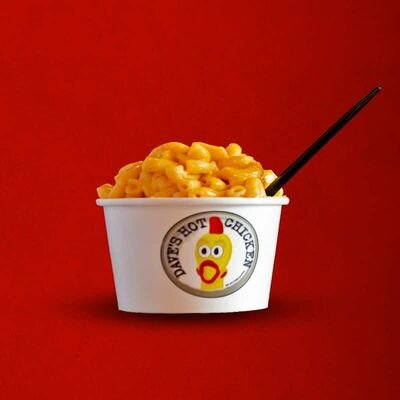
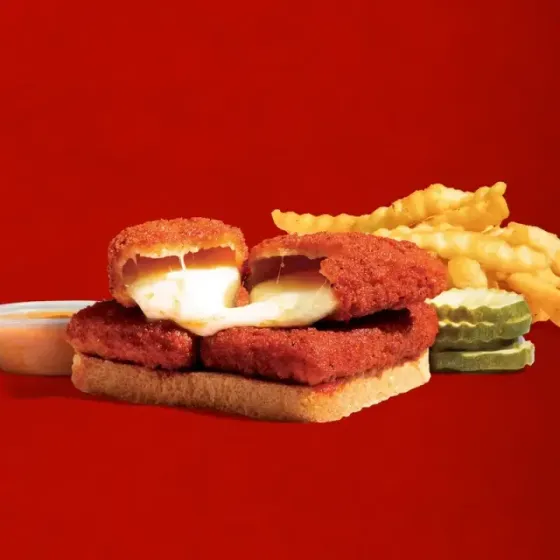
| Mac & cheese, cheese fries, Hot Mozz | Dairy | High |
| Top-Loaded Shakes | Dairy, plus tree nut / peanut if topped with candy or cookie mix-ins | High |
| Plain french fries | Low direct allergen content on paper | Moderate (shared fryer) |
| Kale slaw | Egg or dairy possible in dressing | Moderate |
| Dave’s Not Chicken (cauliflower) |
Egg, dairy in batter/bun; fried in shared oil | High |
*Note: This table reflects the general pattern reported across Dave’s own materials and multiple independent checks, not an item-by-item transcription of the current official chart. Formulations and suppliers change, so use this as orientation, not a final answer.
The Allergens That Actually Matter
U.S. food labeling law recognizes nine major food allergens, and it’s worth knowing the list because it shapes what restaurants tend to disclose and what they do not. Under the Food Allergen Labeling and Consumer Protection Act (FALCPA) and the later FASTER Act, the nine recognized allergens are:
| # | Allergen | Added to U.S. Federal List |
|---|---|---|
| 1 | Milk (Dairy) | 2004 |
| 2 | Eggs | 2004 |
| 3 | Fish | 2004 |
| 4 | Crustacean shellfish | 2004 |
| 5 | Tree nuts | 2004 |
| 6 | Peanuts | 2004 |
| 7 | Wheat (Gluten) | 2004 |
| 8 | Soybeans | 2004 |
| 9 | Sesame | 2023 |
That law mainly governs packaged food labels, not restaurant menus, which is why allergen disclosure at chains like Dave’s is voluntary rather than mandatory in the same way. UK and EU locations operate under a stricter rule: Dave’s own UK site states its allergen guide covers the 14 allergens required under EU Food Information Regulations, a noticeably wider net that includes celery, mustard, and sulphites that U.S. guides typically skip.
Where Each Allergen Shows Up
| Component | Wheat/Gluten | Egg | Dairy | Soy | Notes |
|---|---|---|---|---|---|
| Chicken breading | Yes | Likely | No | Possible | The main source of gluten exposure on the menu. |
| Brioche bun | Yes | Yes | Yes | Possible | Standard enriched bakery bun. |
| Mayo-based sauces | No | Yes | Some | Possible | Composition varies sauce to sauce. |
| Cheese items | No | No | Yes | No | Mac & cheese, cheese fries, Hot Mozz. |
| Fryer oil (shared) |
Cross-contact | Cross-contact | Cross-contact | Cross-contact | Everything fried shares the same oil. |
| Kale slaw dressing | No | Possible | Possible | Possible | Ask about the specific batch dressing used. |
Two things worth sitting with here: First, the breading is where most of the wheat and egg exposure comes from, and it touches nearly everything fried, including sides that do not obviously contain either ingredient. Second, “not listed as an ingredient” and “safe to eat” are not the same thing once shared fryer oil is involved.
The Gluten Question, Answered Honestly
Dave’s does not market a certified gluten-free item, and for good reason. The tenders, sliders, and Not Chicken cauliflower are all hand-breaded in flour, and the fryer oil is shared across the whole fried menu. Fries and kale-slaw are the items most often mentioned as naturally wheat-free on paper, but “on paper” is doing real work in that sentence, since both can pick up gluten from the same fryer or prep surface used for breaded items.
If you have celiac disease, where even trace cross-contact matters, this menu is genuinely difficult to navigate safely, and no amount of careful ordering fully removes that risk. If you have a milder gluten sensitivity rather than celiac disease, the calculation is different, and asking staff about how fries are handled that day is a reasonable next step rather than a formality.
Dairy: The Quiet Problem Child
Dairy shows up in more places than the obvious cheese items. The brioche bun typically contains dairy, several sauces do too, and shakes are built on it directly. Ordering a plain tender with no bun, no cheese, and no sauce meaningfully cuts your dairy exposure, but it does not eliminate the shared surface risk that comes with any fast-casual kitchen.
Mac & cheese, cheese fries, and Dave’s Hot Mozz are the clearest dairy items and the easiest to simply skip if dairy is the concern. Sauces are trickier, since composition varies by recipe and is not always obvious from the name alone. Mustard and mayo-based sauces are common culprits.
Peanuts and Tree Nuts: The Oil Question, Answered Honestly
This is the allergen question people ask most, and it’s also where you will find the most confident-sounding, contradictory answers online.
The most consistent answer across customer reports and franchise responses is that Dave’s fries in soybean oil, not peanut oil. Multiple individual locations have confirmed this directly to customers who called and asked, including allergy-focused reviewers who checked specifically because of a peanut allergy in the household. That’s genuinely useful, and it means a dedicated peanut oil fryer—the scenario that would concern a peanut-allergic diner most—does not appear to be the norm.
That said, it is not universal. At least one customer report describes being told a different oil at a different location, and even within the same location, different staff members have given different answers to the same question. None of this is unique to Dave’s; it’s a predictable result of a large franchise system where kitchen practices are not identical everywhere. The practical takeaway is straightforward: soybean oil is the likely answer, but if a peanut allergy is severe, that likelihood is not good enough. Confirm with your specific location before you order, every time, not just the first time.
Tree nuts and peanuts as direct ingredients are mostly a concern in Top-Loaded Shake mix-ins, where candy or cookie toppings can introduce trace nuts even when the base shake does not contain any.
Dave’s Not Chicken: Plant Based, Not Allergy Safer
Worth clearing up directly: Dave’s Not Chicken is not a soy protein “fake meat” patty, despite what a few generic guides claim. According to reporting from vegan food outlets that covered its launch, it’s made from fresh, whole cauliflower that’s hand-sliced in store, then breaded and fried the same way the chicken is.
That matters for allergy purposes in two ways:
- Shared Fryer Oil: It’s fried in the same shared oil as the chicken, so it carries the same cross-contact profile, not a cleaner one.
- Egg & Dairy in Breading: The batter and bun contain egg and dairy, which is why the product has been publicly described as vegetarian but not vegan.
If you’re avoiding dairy or egg, or you’re vegan rather than vegetarian, Not Chicken does not solve the problem just because it’s plant-based at its core.
Sesame and Soy: The Allergens Guides Often Skip
Sesame became the ninth federally recognized major allergen in the U.S. only in 2023, which means a lot of older restaurant guidance simply does not mention it. Buns and seasoning blends at many chains use sesame in some form, and it’s worth asking about directly rather than assuming its absence because a summary guide did not flag it.
Soy is the other allergen that tends to get buried. It shows up as a likely component in some sauces and breading formulations, largely because soya-based ingredients are common in commercial food manufacturing generally, not because Dave’s uses it more than a typical fast-casual kitchen would.
Does the Spice Level Change the Allergens?
No, and this one has a clean answer. Moving from No Spice to Reaper changes the concentration of cayenne, chili powder, and other seasoning in the glaze, not the underlying ingredient list. If a specific allergen is present at Mild, it’s present at Reaper too, just carrying more heat alongside it. The one thing worth confirming once, rather than assuming, is what’s actually in the seasoning blend itself, since spice mixes can include soy or sesame-derived anti-caking agents that are not obvious from the name.
How Cross Contact Actually Happens
It’s worth understanding the mechanism, not just the warning label. In a shared fryer, oil does not reset between batches. Breaded chicken releases flour, egg wash, and seasoning particles into the oil, and the next batch of fries or cauliflower cooked in that same oil picks up trace amounts of whatever came before it. The same logic applies to prep surfaces, tongs, and gloves during a busy rush. This is standard for any quick-service kitchen that fries multiple items in shared equipment, not a Dave’s-specific shortcoming, but it’s exactly why “the fries do not contain wheat” and “the fries are safe for a wheat allergy” are different claims.
Ordering Safely: A Practical Checklist
- Ask for the current printed or digital allergen guide at the counter rather than relying on a summary you read online, including this one.
- State your allergy before you order, not after, so staff can flag anything relevant during prep rather than after the fact.
- If a fryer or oil type matters to you, ask specifically and do not assume the answer is the same as another location.
- Skip sauces and cheese-based sides if dairy, egg, or soy is a concern. They’re the easiest items to simply leave off.
- For a nut allergy, treat topped shakes as the highest risk item on the menu and ask about the base shake separately from any mix-ins.
- If you have celiac disease or severe airborne/trace allergies, weigh whether a shared-fryer concept is the right choice at all, rather than trying to order around the risk.
Where to Get the Real, Current Information
Dave’s publishes its own nutrition information through its official site, and UK and EU locations publish a more detailed allergen matrix covering all 14 regulated allergens, not just the U.S. list of nine. Both are the right starting point before your visit, and both matter more than any third-party roundup, because ingredient formulations, suppliers, and even fryer oil can change at the franchise level without a public announcement. If you’re ordering for someone with a serious allergy, a quick call to the specific location the same day is worth more than any guide, including this one.
The Bottom Line
Dave’s Hot Chicken is not unusually risky for food allergies compared to other fried chicken concepts, but it is not a safe default either. The breading and buns carry most of the wheat, egg, and dairy exposure, the shared fryer spreads that exposure further than the ingredient list alone suggests, and even a straightforward question like “what oil do you use” can get different answers depending on who you ask. None of that means avoiding the restaurant entirely. It means treating every visit as its own question, asking directly, and not assuming that what was true at one location holds everywhere else.
References & Official Sources
- Dave’s Hot Chicken – Official Nutrition Information
- Dave’s Hot Chicken UK – Official Allergen Guide
- FDA – Food Allergies: What You Need to Know (FALCPA & FASTER Act)